Origins of the Name
The surname Podbury is of English origin and is considered extremely rare. Linguistic and genealogical sources identify it as a locational surname, derived from a place name. The most likely origins are:
- Panborough in Somerset, recorded in the Domesday Book (1086) as Padenberia, later Patheneberg (1227).
- Padbury in Berkshire, recorded as Pateberie in 1086.
Both names derive from Old English elements:
- beorg meaning "hill"
- burh meaning "fortified place"
- and possibly Padda, a pre-7th-century tribal or personal name.
The surname Podbury likely referred to someone who lived near or came from one of these places. It first appeared in written records during the medieval period, though spelling variations (Padbury, Padbery, Padberry) were common until the 19th century.
Early Life and Occupation
Given the rural nature of Somerset and Berkshire during the medieval and early modern periods, it is highly probable that the earliest Podburys were agricultural workers, living in small villages and working the land. Their occupations would have included:
- Pig keeping
- Sheep herding
- Crop farming
- Wool production
- Cider making
Pig farming, in particular, was a staple of Anglo-Saxon rural life, and the association with hills and fortified farmsteads supports the likelihood that the Podbury name was originally linked to livestock farming on elevated land.
Migration to Devon
By the 1500s–1600s, a branch of the Podbury family had migrated to East Devon, settling in and around the parish of Ottery St Mary. This migration was consistent with regional patterns, as Somerset and Devon shared trade routes and agricultural ties.
Ottery St Mary was a well-established Saxon parish with a strong wool trade, cider orchards, and a stable rural population. The Podbury name became firmly rooted in this area, appearing in parish registers and local records from the 17th century onward.
The family lived in Ottery St Mary and its surrounding hamlets, including:
- Tipton St John
- Alfington
- Metcombe
- Fairmile
These villages formed a tight-knit community where surnames often persisted for generations.
Life in Devon (1700s–1800s)
Throughout the 18th and 19th centuries, the Podbury family remained in East Devon, working as:
- Farm labourers
- Shepherds
- Cider makers
- Domestic workers
- Tradesmen
The surname remained rare, and most Podburys in England during this period could be traced to the Devon line. Census records from 1841 onward show Podbury households in Ottery St Mary and nearby villages, often engaged in agricultural work.
Industrial Migration to London
In the late 19th and early 20th centuries, a significant shift occurred. A member of the Devon Podbury family moved to London to work on the Metropolitan Line, part of the expanding London Underground.
This move was part of a broader trend of rural families relocating to urban centres for industrial employment. The Metropolitan Line, opened in 1863 and expanded in the decades that followed, required skilled and unskilled labour for construction, navigation, and maintenance.
The Podbury family's involvement in this project marked the transition from rural Devon life to the industrial outer areas of London.
Modern Dispersion
Following the move to London, the Podbury family gradually spread to other parts of England, including:
- The Midlands
- Buckinghamshire
- Australia and the United States (via emigration)
Despite this dispersion, the surname remains exceptionally rare. Most individuals bearing the name today can trace their ancestry back to the Devon Podburys, who in turn likely descended from the original Somerset or Berkshire line.
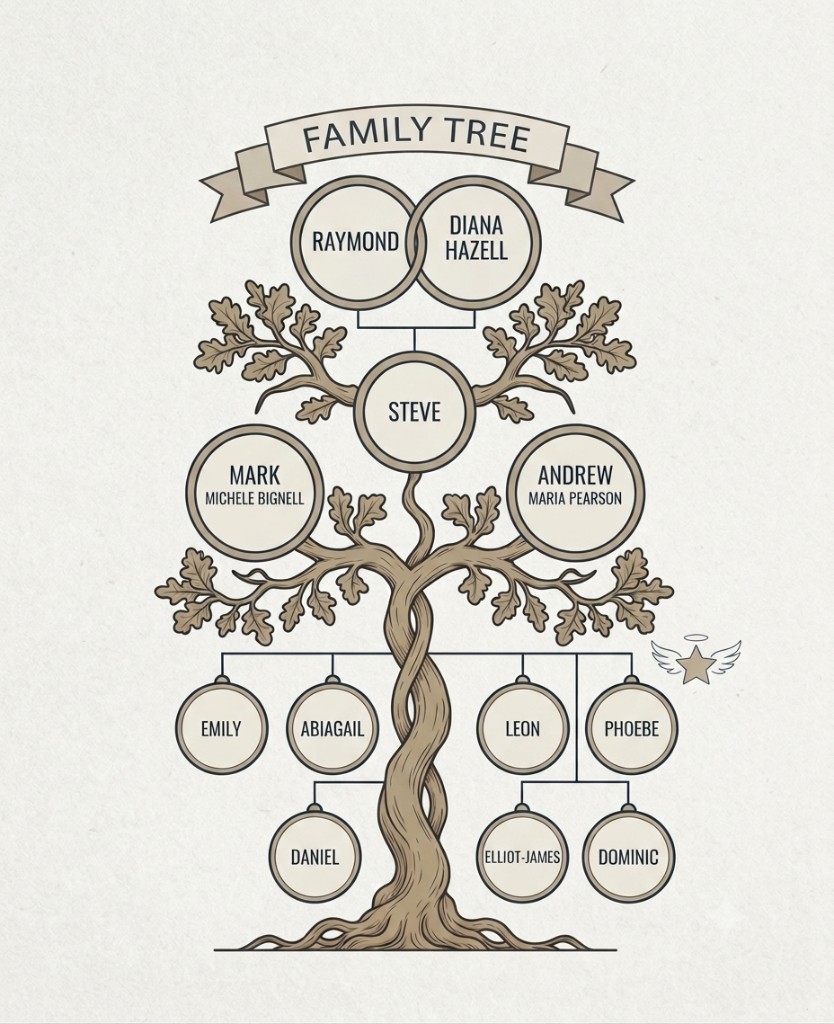
Buckinghamshire Podbury Family Tree
The Buckinghamshire branch of the Podbury family, traced through the generations.